
Fig. 1
Bacteria
e.g. Escherichia, Staphylococcus
0.5–5 µm
Single cells without a nucleus. Most are harmless or essential; a few cause disease.
Professor Cassandra Neitling teaches the biology of bacteria, viruses, fungi and parasites at Folsom Lake College, preparing students for careers in nursing and the health professions.

Microbiology is the study of the bacteria, viruses, fungi, protozoa and helminths that shape human health. In BIOL 442: General Microbiology and Public Health, students examine how these organisms are built, how they live and reproduce, how they cause disease, and how we identify, treat and prevent infection, from individual patients to global epidemics and pandemics.
The course is taught as preparation for careers in healthcare. Most students are headed toward nursing and other health professions, and the lab is where much of the learning happens: microscopy, culturing bacteria, and identifying unknown microorganisms from a simulated patient infection.
| Course | BIOL 442 |
| Units | 5 (3 lecture + 2 lab) |
| Format | Lecture + Laboratory |
| Prerequisite | CHEM 305 or CHEM 400 |
| Total points | 500 |
I am Cassandra Neitling, professor of Microbiology at Folsom Lake College. I have been at FLC for a few years and have LOVED every minute of it.
I started my academic career at Lake Tahoe Community College and transferred to Cornell University for my undergraduate degree and Harvard University for my graduate degree. Community college has always held a special place in my heart because it was where I really grew up and decided who I wanted to be. It gave me the confidence to pursue any university I aspired to attend. I admired my professors, developed incredibly beneficial study habits, and learned a TON about science.
I look forward to working with you to develop your scientific confidence, to perfect your own personal study techniques, and support you throughout your educational journey. I hope you will feel encouraged every step of the way and I know you will learn all about MICROORGANISMS!
Let's do this!
Prof.Professor Cassandra Neitling

The five groups studied in BIOL 442, with their typical sizes.
e.g. Escherichia, Staphylococcus
0.5–5 µm
Single cells without a nucleus. Most are harmless or essential; a few cause disease.
e.g. influenza, SARS-CoV-2
20–300 nm
Not cells: genetic material in a protein coat that must take over a host cell to replicate.
e.g. Candida, Aspergillus
Yeast cells 3–10 µm
Yeasts and molds. Some cause infections; others give us bread and penicillin.
e.g. Plasmodium, Giardia
10–200 µm
Single cells with a nucleus that move and feed, including the parasite that causes malaria.
e.g. tapeworms, roundworms
Millimeters to meters
Parasitic worms: multicellular animals, often visible without a microscope.
By the end of BIOL 442, students can:
Lake Tahoe Community College
Where she started her academic career
Cornell University
Undergraduate degree degree & field
Harvard University
Master's degree degree & field
“I am committed to creating a course that is inclusive in its design.”
From her course syllabus.
BIOL 442 · General Microbiology and Public Health · 5 units: 3 lecture (54 hrs) + 2 lab (108 hrs)
Times are for Fall 2026. Always confirm in the official Folsom Lake College class schedule (search “BIOL 442”). Course materials are in Canvas under Modules.
The schedule you will follow throughout the semester. Make sure to pay attention to required reading, pre and post lab due dates, quizzes, and exams.
The textbook PDF and all other course materials are in Canvas.
Please let Professor Neitling know in advance. Questions are also welcome during her on-campus hours, Monday–Thursday 10:30–4:30.
| Day | Time |
|---|---|
| Monday–Thursday | 4:00–5:00 |
| Friday | 9:00–5:00 via Zoom |
CHEM 305 (Introduction to Chemistry) or CHEM 400 (General Chemistry I) with a grade of C or better.
Equivalent chemistry courses from other colleges may qualify. Bring official or unofficial transcripts to the first day of class.
Some biology coursework helps: BIOL C1000 (Introduction to Biology with Lab), BIOL 310 (General Biology), or ENGWR 110 (College Reading and Writing Skills).
Microbiology Fundamentals: A Clinical Approach, 4th ed. (Cowan & Smith), with the companion lab manual, 4th ed. (Obenauf & Finazzo).
Free PDF options are posted in Canvas.
| Component | Points | What it is |
|---|---|---|
| Weekly quizzes | 100 | 15-minute quiz each week from lecture and the book. Top 10 count, with 2 “freebies.” No make-ups. |
| Final exam | 80 | Cumulative, same format as the quizzes. |
| Notecards | 25 | One per lecture (1 pt each). Much of the final comes from these. |
| Library Research Project | 15 | One library session using PubMed and ChatGPT to answer a research question. |
| Component | Points | What it is |
|---|---|---|
| Pre-lab reports | 50 | 2 pts each: read the manual, watch the video, record it in your lab notebook. No late submissions. |
| Post-lab reports | 50 | 2 pts each: perform the lab, record results, answer the questions. |
| Unknown Bacteria Project | 50 | Most of the second half of the semester: identify the bacteria in a mixed culture from “your patient's” infection. |
| Midterm lab practical | 50 | Microscopes and lab results to read and interpret. |
| Final lab practical | 80 | Covers every assay performed during the semester. |
Up to 25 points total: an end-of-term final exam revision quiz (up to 10), weekly tutoring sessions with a past microbiology student (up to 10), and INDIS 314/315 study skills courses (up to 5).
No free points. If you're one point from the next grade, extra credit is how you earn it.
Most nursing programs require an A or B in Microbiology. Plan ahead, track your points, and reach out early if you're at risk of a C. Use every resource: office hours, embedded tutors, classmates and your Success Coach.
Folsom Lake College is one of the most welcoming, inclusive, and caring environments I have ever experienced. The faculty and administration honestly want you to succeed in becoming the best version of yourself, have an exciting and fulfilling career, and feel supported along the way. I highly recommend that you USE EVERY RESOURCE the college offers! From tutoring to counseling services, the science center, financial assistance, writing assistance, career counseling... anything you can think of, the college has someone whose sole job it is to help you on your journey. A great place to start is David Staves, your success coach!
— Professor Neitling
See everything Folsom Lake College offers students on the college's Student Resources page.
A great place to start: David Staves, your success coach.
Visit FLC pageParking, buildings and how to find your way around campus.
Visit FLC page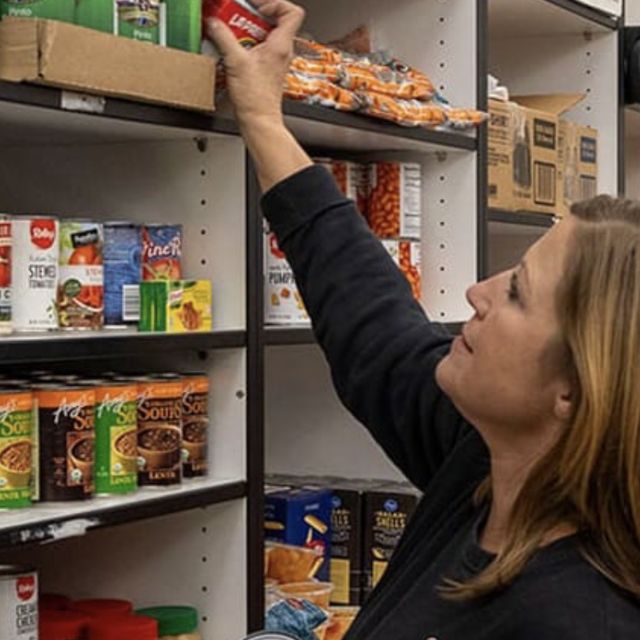
Food, housing and other basic-needs support for students.
Visit FLC page
Health and mental wellness resources.
Visit FLC page
Tutoring and study help for science courses.
Visit FLC page
Disability Services and Programs for Students (DSPS).
Visit FLC pageFill out this form completely. The more specific you are, the stronger your letter can be. Fields marked * are required.
Pay is the California median annual wage (half earn more, half less) from the U.S. Bureau of Labor Statistics, May 2025 estimates. Each career is shown with a real program that lists Microbiology. Requirements vary by school, so always check the prerequisite list of every program you apply to.
Sources: BLS wages · BLS career profile · Sac State BSN prerequisites
Sources: BLS wages · BLS career profile · Sac State BSN prerequisites
Sources: BLS wages · BLS career profile · Sac State BSN prerequisites
Sources: BLS wages · BLS career profile · UC Davis PA prerequisites
Sources: BLS wages · BLS career profile · UCSF PharmD prerequisites
Sources: BLS wages · BLS career profile · VMCAS 2026 prerequisite chart
Sources: BLS wages · UCLA DDS prerequisites · Pacific DDS prerequisites
Sources: BLS wages · UC Davis School of Medicine prerequisites
For comparison, registered nurses in California earn a median of $140,270, and many go on to the advanced practice roles above. Wage data: BLS Occupational Employment and Wage Statistics, California, May 2025. Last reviewed October 2026.